
Public agencies today operate in a world where digital breakdown, infrastructure failures, extreme weather, and geopolitical shocks are no longer rare events, but the backdrop of everyday governance. We expect bureaucracies to anticipate risks, respond quickly and protect citizens when crises unfold — yet many are not designed for this kind of high‑reliability work. This piece looks at insights from research on high‑reliability organizing to understand the conditions that enable certain organizations to respond reliably when the unexpected strikes.
Lisa Scordato, Forsker 2, NIFU
From normal accidents to high reliability
Two influential organizational perspectives on safety, the Normal Accident Theory and the High Reliability Organization tradition, have examined industries and organizations operating under hazardous and high-risk conditions, developed analytical concepts to explain how structure and culture shape safety, and debated a fundamental question: are catastrophic failures and crises unavoidable in complex, tightly coupled systems?
The debate begins with Charles Perrow and his theory of “normal accidents.” Studying emblematic industrial disasters in the 1980s such as the Three Mile Island accident and the Chernobyl disaster, Perrow argued that in complex and tightly coupled systems, accidents are not anomalies but structural features. Small failures interact in unpredictable ways and escalate beyond control.
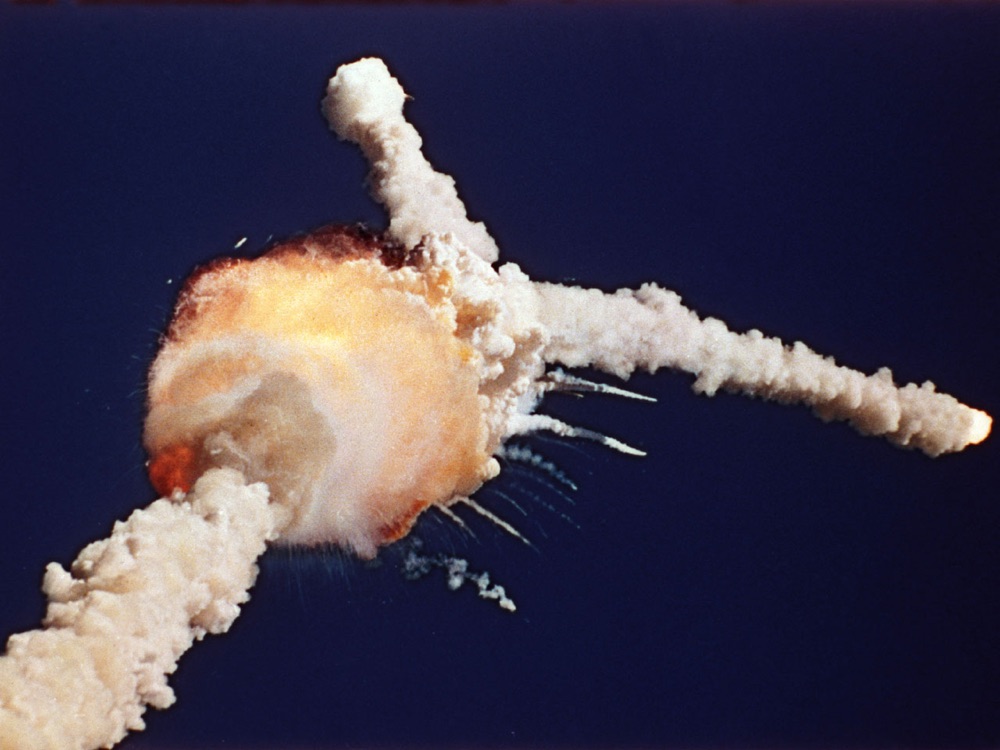
Diane Vaughan extended this insight in her analysis of the Space Shuttle Challenger disaster in 1986. The shuttle broke apart just seconds after liftoff, and all seven crew members were killed. Technically speaking, the immediate cause was a failure of an O-ring seal, exacerbated by unusually cold temperatures.
But the point that Vaughan really wanted to make was that the disaster wasn’t just a technical problem; factors internal to NASA’s organizational structure played a major role as well. The engineers had warned that the O-rings might not function properly in cold weather, but decision-makers at the top didn’t listen, reflecting serious communication failures. In addition, there was significant schedule pressure pushing NASA’s leadership to prioritize launch over safety concerns. Furthermore, groupthink within the organization aggravated the situation. The work environment at NASA encouraged conformity and discouraged dissent, creating a false sense of confidence. What Vaughan realized was that organizations tend to normalize deviance – and that this is an endemic feature of organizational culture.
So, if catastrophic failure is structurally embedded, are organizations doomed to drift toward disaster?
High Reliability Organization theory
High Reliability Organization (HRO) theory emerged as a counterpoint to the pessimistic ideas of accidents as unavoidable. Scholars such as Todd LaPorte and Gene Rochlin studied nuclear aircraft carriers, air traffic control and power grids—systems often described as “a million accidents waiting to happen”. Yet major breakdowns were rare. Reliability, they argued, is actively produced.
Building on this work, Karl Weick and Kathleen Sutcliffe identified five recurring principles: sensitivity to operations, reluctance to simplify, preoccupation with failure, deference to expertise and commitment to resilience. These are not structural blueprints, but ongoing practices. Reliability is something organizations do.
Central to this perspective is “collective mindfulness”– a shared attentiveness to weak signals and emerging anomalies. Reliability depends not only on formal design but on social and cognitive processes: curiosity, doubt, prosocial motivation and the capacity to think together under pressure.
Flight operations have become emblematic examples of what high reliability can look like when strong collective mindfulness is in place.
But this also raises an important question: if these principles work so well in aviation, can they really be applied everywhere?
Weick and Sutcliffe argued that they can, underscoring that collective mindfulness can be presumed to be inherent in all types of organizations, and that high reliability depends on interpersonal and social skills. Accidents become more likely when organizations drift towards individualism and embrace a culture of macho heroics.
Public administration is not an aircraft carrier
The appeal of HRO thinking is obvious, but are these insights useful for understanding how public administrations can organize for high reliability? And can public bureaucracies adopt HRO principles?
To answer this, we need to look at the specific features of public organizations and under which conditions they operate.
Many public administrations cannot prioritize safety above everything else. They must balance a long list of conflicting public values. This means that when civil servants or public managers make decisions, they have to consider far more than technical factors; they also have to take into account politics, public opinion, and budget constraints.
We also know that public administrations face a set of organizational pathologies: they operate through hierarchy, departmentalization and principal-agent problems. In addition, learning constraints and groupthink may undermine reliability.
We should also not forget the democratic context in which these pathologies are embedded. This introduces the need to combine responsiveness (listening to citizens) with responsibility (adhering long-term efficiency and safety).
All these tensions are inherent to the mandate and missions of public administration and cannot be removed.
From normal accidents to normal turbulence
Recent debates on robust governance shift the conversation in an important way. We are reminded that the world in which public administrations now operate is fundamentally different from the environment that shaped Normal Accident Theory and the early High Reliability tradition.
Instead of asking whether failure is unavoidable or whether perfect reliability is even possible, scholars now ask a more pragmatic question: how can public institutions remain functional when turbulence becomes the baseline? In such settings, events, demands and political support fluctuate rapidly and unpredictably.
Hence the discussion has moved from “normal accidents” to “normal turbulence”. This shift matters because turbulence changes the conditions under which reliability must be produced. In contrast to earlier ideas, the robust governance perspective foregrounds adaptive capacity – an organization’s ability to adjust, absorb shocks, and continue operating despite ongoing disruption.
In practical terms, this means that high reliability depends on strategies that allow organizations to cope with surprise. Some of these strategies involve structural conditions such as redundancy or slack – essentially, creating buffers, backup systems and alternative ways of doing things.
But adaptive capacity also requires constant vigilance and continuously learning from mistakes. Reliability, in such environments, is not a stable achievement but a dynamic process.
Institutional conditions matter
Risk awareness is not only organizational but fundamentally institutional. Norms shape what is considered an acceptable level of risk. Cognitive frames influence how threats are interpreted. Power relations determine which signals are amplified and whose warnings are taken seriously.
These institutional conditions help explain why similar agencies can perform so differently across countries or policy fields. Reliability is not merely produced within organizations – it is embedded in broader governance arrangements and in societal trust. This raises deeper questions: How does the capacity to recognize risks depend on democratic structures? And how does attention to safety rely on the level of trust between citizens and the state?
Because what happens when citizens no longer expect public institutions to be reliable? What if they stop believing these institutions can protect them? Even more troubling: what if public administrations themselves become sources of risk or threats to public safety?
Can public administrations stay ready for crises?
Ideas from Normal Accident Theory, the study of normalization of deviance, and recent work on robust governance offer valuable insights. The central challenge for contemporary public agencies is that they must remain reliable while operating in conditions of constant disruption.
Public administrations cannot, in practice, become classic technical HROs, as their mandates are too broad, contested and politically constrained. But they can become reliability‑seeking organizations. This means paying attention to collective mindfulness without compromising legality; building redundancy without eroding accountability; and deferring to expertise while still meeting democratic expectations. It also means accepting that turbulence is normal and that preparedness must involve the capacity to adapt, not only having predefined plans.
The text is adapted from Lisa Scordato’s trial lecture and public PhD defense held on 13 January 2026.
Illustration: The space shuttle Challenger disaster reflects failed routines and preparations. Photo: urcameras1
References and further reading:
- Ansell C, Sørensen E, Torfing J, Trondal J. (2024) Robust Governance in Turbulent Times. Cambridge University Press; 2024.
- Vaughan, D. (1996). The Challenger launch decision: Risky technology, culture, and deviance at NASA. University of Chicago press.
- Rochlin, Gene I., Todd R. La Porte, and Karlene H. Roberts (1987). The self-designing high reliability organization. Naval War College Review, Autumn.
- Scordato, Lisa (2026,) Public sector capabilities for resilience. Tensions between knowledge and action in crisis management. Universitetet i Oslo. Doktorgradsavhandling.
- Weick, Karl E., and Karlene H. Roberts 1993 `Collective mind in organizations: Heedful interrelating on flight decks’. Administrative Science Quarterly 38/3: 357-381
- Weick, Karl E., K. Sutcliffe, and D. Obstfeld 1999 `Organizing for high reliability’. Research in Organizational Behavior 21: 81-123.
Mer om bærekraft i denne utgaven
Hovedartikkel: Når bærekraft går i stå – hvordan skaper vi ny framdrift?
Bærekraftkomiteen: Kva er eigentleg den beste beredskapen?
Sidetekst: Bærekraftkomiteens medlemmer om samarbeidet
Sidetekst: Hva skjer med bærekraftsmålene? Refleksjon og fakta
Sandra Harding (1935–2025): Mellom det som er og det som ennå ikke er
Why some public agencies stay ready for crisis — and others don’t