
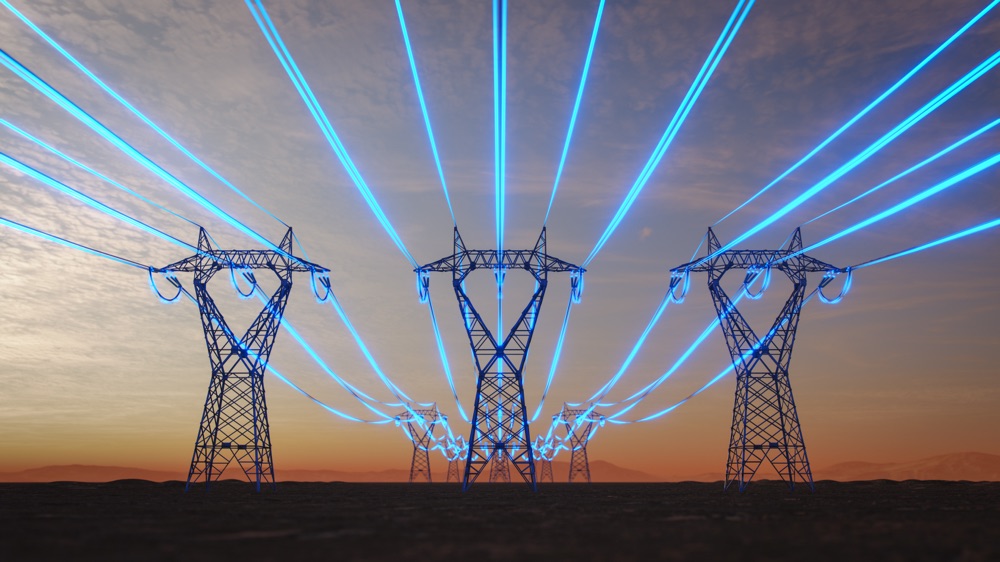
Once built on «divide and conquer,» European policy has shifted to a logic of coalition-building. Digitalisation and climate action are now presented not as competing priorities, but as mutually reinforcing engines of growth and security.
Moritz Wildburger, MA student at ESST, Maastricht Univerity /UiO
The concept of ‘divide et impera’, commonly known as ‘split and conquer’, appears outdated by today’s standards and ways of political thinking. The practice of playing different interest groups off against each other and maintaining control by fuelling internal conflicts was once at the core of imperial rule, but today it is nothing more than a ghost of futures past.
The European Union has indeed turned to a completely different strategic logic. Instead of playing interest groups off against each other, the European Commission has been trying for years to unite them.
Since the 2015 Circular Economy Strategy under the Juncker Commission, the EU has increasingly focused on strategically linking different policy areas, in particular aligning economic and environmental goals. This approach culminated in the Twin Transition Strategy in 2022, which explicitly links the success of the green transition to progression within digital innovation.
This reflects what had already emerged as a new narrative since the 2019 European Green Deal: digital technologies are not only compatible with climate action – they are essential to it.
Digitalisation is presented as a contingent success factor in transitioning to a zero-emission future. More than that, digitalisz
Narratives in Policymaking
This deeply techno-optimistic approach is in line with the theory of ecological modernisation. Following the Club of Rome’s 1972 report ‘The Limits to Growth,’ the idea of endless economic growth was seen as inherently incompatible with environmental sustainability.
The theory of ecological modernisation rebutted said notion: instead, it argues that technological innovations can enable continued economic growth while achieving ecological goals without requiring a system-wide transformation.
Narratives like this play a central role in shaping and justifying policy. Narratives do not only describe reality, but they also give meaning to events and guide how issues are understood and presented to specific audiences.
Events such as the COVID-19 pandemic or the rise of generative AI do not have a predefined meaning; they are interpreted and politicised through narrating. The narrative that the emergence of ChatGPT threatens Europe’s economic and technological autonomy, for example, has helped justify massive investments in AI and digital technology.
The EU first explicitly applied this narrative logic in its 2015 Circular Economy Strategy, which aimed to realign its climate policy to make it more economy-friendly, especially after the 2008 economic crisis.
By drawing on ecological modernisation, the Commission succeeded in aligning climate goals with economic interests. Recycling, for example, was no longer seen merely as waste reduction, but also as a source of affordable raw materials and a driver of economic competitiveness.
This strategy was further developed in the European Green Deal (2019) and the Twin Transition (2022), which also considered more recent events such as the COVID-19 pandemic, Russia’s invasion of Ukraine, and the AI-boom as reasons for accelerating digital and ecological integration.
The Norwegian Dimension
At the national level, Norway closely aligns itself with EU policy objectives, even though it is not a full member of the EU. Through its participation in the European Economic Area (EEA), Norway is formally bound by much of the EU’s legal framework and has voluntarily adopted many of its goals, including the goal of net-zero emissions by 2050.
Norwegian strategy papers such as the 2021 Climate Action Plan explicitly refer to climate cooperation with the EU and strike the same techno-optimistic tone. Technology is seen not only as a means of reducing emissions, but also as a business opportunity.
Like the EU, Norway presents the transition not as a time of sacrifice, but as a time of empowerment and innovation. However, the necessity of this transition was emphasised to a lesser extent, as Norway already benefits greatly from its hydropower resources and primarily sought to position itself at the forefront of digitalisation and green innovation.
Apart from that, the techno-optimistic narrative of the twin transition is viewed as the commonsense solution, dominating political discourse in both the EU and in Norway.
From a governance perspective, the narrative of the digital and green twin transitions has proven to be an effective and useful strategy. Rather than dividing, it unites diverse interest groups by promising that no one will have to make sacrifices: the economy can continue to grow, environmentalists are promised zero emissions and climate protection, the research and technology sector receives massive funding, and citizens are promised a better, greener life without major changes to their lifestyle.
It is a win-win narrative that, as of the war in Ukraine, has even been presented as a matter of national security. Ultimately, this narrative is politically successful because it unites rather than divides. It brings together actors who might otherwise oppose a green transformation and reconciles digitalisation and environmental goals with economic growth.
This helps establish political consensus and public support. However, it is important to keep in mind the risks of creating path dependencies, where alternative approaches are overlooked or sidelined. The techno-optimistic narrative is after all a utopian narrative, it is a vision of what could be, but no guarantee of what will be.
This article was originally published in Teknovatøren, the magazine of the students of TIK Centre for Technology, Innovation and Culture, University of Oslo.
Go to www.teknovatoren.no for more.
Literature
References Bareis, J., & Katzenbach, C. (2022). Talking AI into Being: The Narratives and Imaginaries of National AI Strategies and Their Performative Politics. Science, Technology, & Human Values, 47(5), 855–881 https://bit.ly/44FuK0l
European Commission. (2019). The European Green Deal. https://bit.ly/4rCIMcY
European Commission. (2022). 2022 Strategic Foresight Report: Twinning the green and digital transitions in the new geopolitical context.
European Commission, Secretariat-General. (2022). COMMUNICATION FROM THE COMMISSION TO THE EUROPEAN PARLIAMENT AND THE COUNCIL 2022 Strategic Foresight Report Twinning the green and digital transitions in the new geopolitical context. https://bit.ly/49W0img
Hermwille, L. (2016). The role of narratives in socio-technical transitions—Fukushima and the energy regimes of Japan, Germany, and the United Kingdom. Energy Research & Social Science, 11, 237–246. https://bit.ly/4aqYm5h
Kovacic, Z., Garc.a Casa.as, C., Argüelles, L., Y..ez Serrano, P., Ribera-Fumaz, R., Prause, L., & March, H. (2024). The twin green and digital transition: High-level policy or science fiction? Environment and Planning E: Nature and Space, 7(6), 2251–2278. https://bit.ly/4oz7ubx
Leipold, S. (2021). Transforming ecological modernization ‘from within’ or perpetuating it? The circular economy as EU environmental policy narrative. Environmental Politics, 30(6), 1045–1067. https://bit.ly/4ixwP48
Photo: imaginima