

Drawing on the history of technological revolutions and recent empirical research on task exposure, Mark Knell argues that the labour-market effects of artificial intelligence will depend less on technical capability than on how societies reorganize tasks, skills, firms, and institutions around it.
Mark Knell, Professor Emeritus, NIFU
Eight years ago, in the article “Robots and Jobs” in Forskningspolitikk, I described the digital revolution as a long deployment process beginning with the transistor in 1947 and the microprocessor in 1971. Successive waves of computing reorganized production and services, displacing workers in specific tasks while generating new sectors and forms of demand over time.
Generative AI marks a new phase of this trajectory. The central issue is not whether the technology is powerful, but whether it will primarily substitute for labour or augment it. As in earlier technological revolutions, employment outcomes will depend on task reallocation, demand expansion, institutional adaptation, and the pace of adjustment.
The history of computing
Since the early 1970s, computing costs have fallen exponentially. Digital technologies automated routine tasks across manufacturing and services, contributing to job polarization in advanced economies.
Research by Autor, Levy, and Murnane (2003) showed how computerization substitutes for routine tasks while complementing abstract and interpersonal ones. Subsequent evidence (Autor, 2015) documented declining middle-skill employment alongside growth in high- and low-skill occupations.
Early estimates by Frey and Osborne (2017) suggested that a large share of U.S. occupations faced high risk of computerization. More recent work by Arntz, Gregory, and Zierahn (2016) emphasized task heterogeneity within occupations, reducing estimated exposure when task variation is considered. This task-based perspective has become central to current assessments.
Despite disruption, aggregate employment continued to expand in most advanced economies. Compensation mechanisms operated through falling prices, rising real incomes, new products, and increased demand. As Bessen (2019) argues, technology often increases labour demand in expanding industries even as it displaces workers in specific tasks.
This history suggests that technological revolutions reshape task composition more than they eliminate work altogether. However, adjustment is neither automatic nor distributionally neutral.
Historical parallels in economic thought
The debate over AI echoes classical discussions of machinery and employment. Adam Smith emphasized the productivity gains of division of labour. David Ricardo later acknowledged that machinery could reduce labour demand in the short run. Thomas Malthus underscored the role of effective demand in sustaining employment.
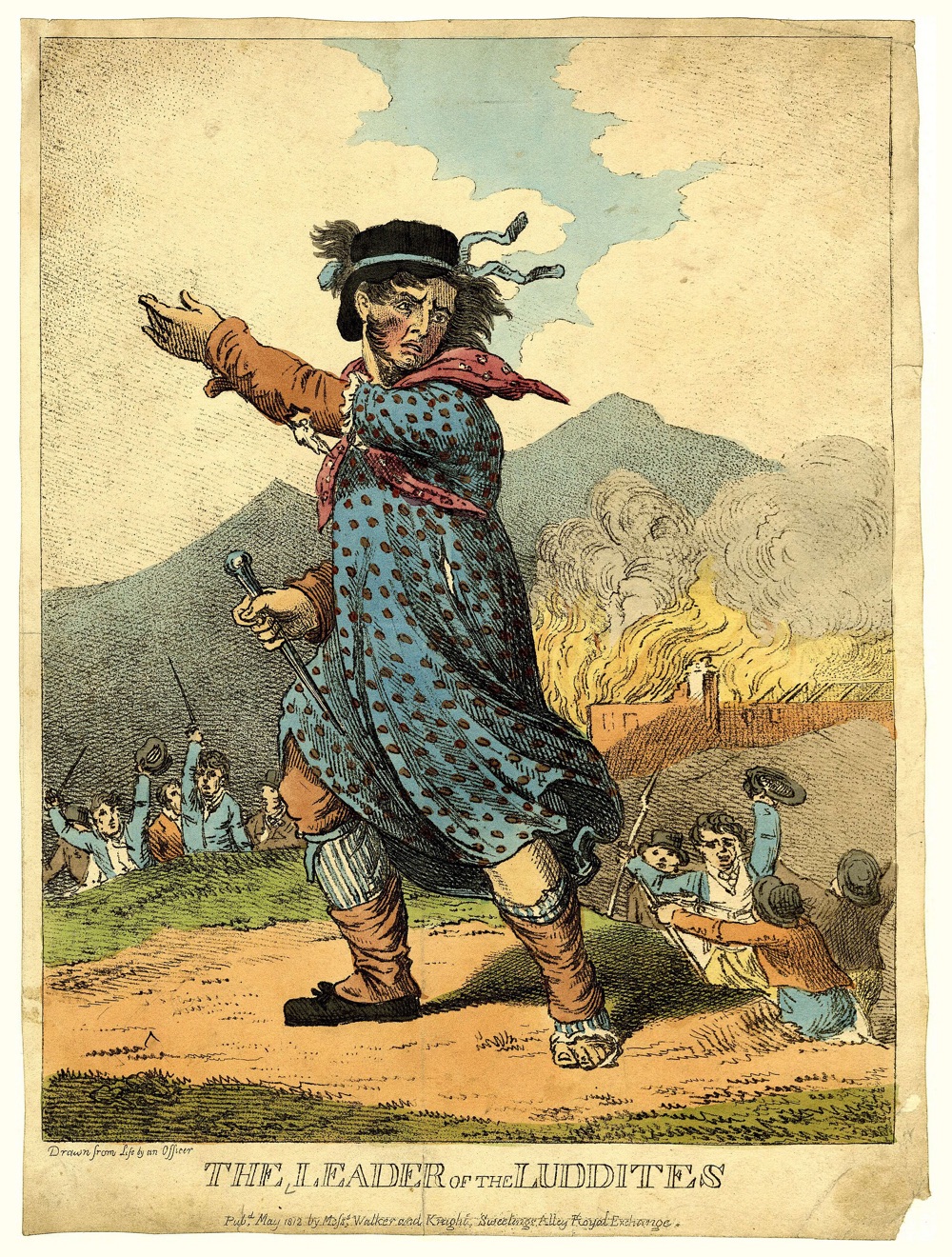
During the Industrial Revolution, mechanization displaced artisans even as it expanded output. In the twentieth century, Joseph Schumpeter framed this process as creative destruction: innovation disrupts existing structures while generating new economic activity.
These perspectives clarify a persistent tension. Technological change simultaneously generates displacement pressures and compensatory forces. The net outcome depends on demand growth, investment, and the speed at which new sectors emerge.
Will AI replace human labour?
Artificial intelligence extends automation beyond routine manual and cognitive tasks. Generative AI systems can produce text, code, images, and data analysis at near-professional levels. This broadens the scope of automation into domains previously considered resistant to technological substitution.
Recent analyses of generative AI indicate that a significant share of work hours – particularly in cognitive and administrative tasks – could be technically automated. Yet exposure is not equivalent to elimination. Occupations consist of bundles of tasks, many requiring contextual judgment, tacit knowledge, responsibility, and social interaction.
The critical distinction is therefore between task substitution and occupations disappearing. Historical evidence suggests that technological change more often reconfigures jobs than eradicates them.
Recent research
Contemporary empirical work refines these insights. Acemoglu and Restrepo (2020) show that industrial robots reduced employment and wages in exposed U.S. commuting zones, highlighting localized displacement effects.
At the same time, other studies find productivity gains and complementarities in AI-assisted work environments, particularly for less experienced workers.
Generative AI may differ from earlier technologies in three respects: rapid diffusion through digital infrastructure, concentration of capabilities in a small number of firms benefiting from scale and data network effects, and its focus on high-wage cognitive tasks.
These features may amplify market concentration and slow the emergence of offsetting employment in new firms.
Whether productivity gains translate into broader employment growth will depend on the elasticity of demand for AI-augmented goods and services, the rate of firm entry, and the capacity of labour markets to reallocate workers.
The effects of AI
Displacement pressures are real. Office automation in the late twentieth century reduced demand for secretarial and clerical roles; AI extends automation deeper into professional domains. Its speed and scale may compress adjustment periods.
Yet augmentation mechanisms are equally significant. AI lowers the cost of experimentation, accelerates research and development, supports scientific discovery, and enhances decision-making. Field experiments show that AI assistance can raise productivity and reduce performance dispersion within firms.
Generative systems remain imperfect. They produce errors, hallucinations, and biased outputs. Effective deployment requires human oversight and institutional safeguards. Over-delegation may erode organizational learning if managers lose engagement with complex processes. Generative models recombine existing patterns and are less reliable in genuinely novel contexts.
The balance between displacement and augmentation will depend on investments in education, organizational redesign, and macroeconomic policy. If productivity gains translate into rising aggregate demand, new sectors and occupations may emerge. If gains accrue narrowly and demand remains constrained, displacement effects may dominate.
Adapting to technological change
Institutional responses are decisive. The World Economic Forum emphasizes skill-based organizational models and lifelong learning. The International Monetary Fund cautions that AI-driven productivity gains could increase income inequality if adoption is uneven and labour mobility limited. The Organisation for Economic Co-operation and Development highlights governance challenges, including algorithmic bias, data concentration, and competitive dynamics in AI-intensive markets.
These assessments converge on a common conclusion: labour-market outcomes depend on complementary investments in skills, organizational redesign, competition policy, and macroeconomic management. Technological capability does not determine distributional outcomes; institutions do.
Conclusion
The present phase of the digital revolution does not herald the end of work. It heralds a reallocation of tasks within and across occupations.
There is no technological determinism in employment outcomes. Since the Industrial Revolution, productivity-enhancing technologies have displaced labour in the short run while generating new forms of employment over time. But this pattern has depended on expanding demand, institutional adaptation, and competitive market structures.
Generative AI will reshape labour markets not through algorithms alone, but through policy choices, organizational strategies, and educational investments. Whether it augments human capabilities and broadens prosperity or deepens inequality and concentration will depend less on code than on institutions.
Top photo: hapabapa
Adam Smith on Division of Labour and the Dynamics of Tasks

Two hundred and fifty years ago, on 8 March 1776, Adam Smith published An Inquiry into the Nature and Causes of the Wealth of Nations. In its opening chapters, he places the division of labour at the centre of economic analysis, showing that productivity growth begins with the organization of work into distinct tasks.
Using the example of the pin factory, Smith demonstrated how subdividing production into specialized operations multiplies output. One worker performing all stages produces very little; a small group dividing the process into separate tasks produces thousands. The gain comes not from machinery alone, but from the systematic reorganization of work.
Smith identified three mechanisms that boost productivity: repetition increases dexterity, avoiding task switching saves time, and concentrating attention on simplified operations stimulates invention. Specialization itself generates technological improvement and deepens it over time.
He also related the extent of the market to the division of labour. Expanding demand allows finer task specialization and justifies investment in tools and machinery, creating cumulative growth.
Modern task-based analyses of technological change formalize this insight. They examine how innovation reallocates tasks between workers and machines in growing markets. Contemporary debates on AI and employment reflect a Smithian principle: growth and innovation emerge from the ongoing reshaping of tasks.