
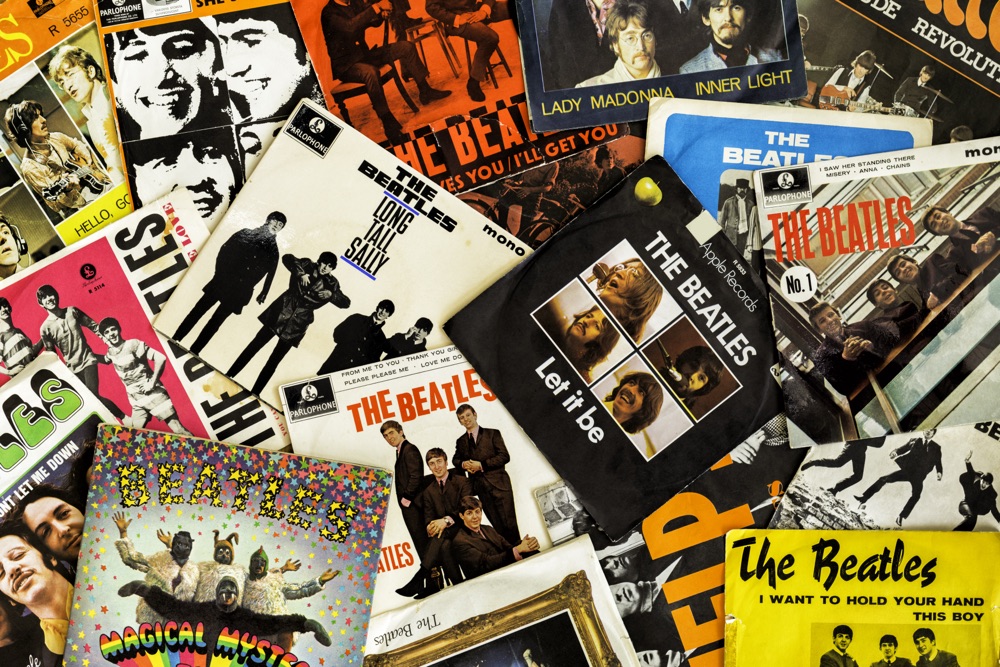
Schumpeter and Simon help us separate real innovation from statistical mimicry.
By Mark Knell, Professor Emeritus, NIFU
Creativity has become the battleground of our technological moment. Generative AI now produces songs, images, and text at industrial scale, and many claim that machines have finally crossed the line into creativity itself. But the line has not moved as far as it appears.
AI is not creative
AI does not create; it reorganizes. It ingests humanity’s archives and produces new arrangements assembled entirely from what has already existed. The impression of novelty arises from speed and the sheer volume of output, not from the arrival of something unprecedented. It is creativity by recombination – rapid, competent, and ultimately bounded by the past.
The recent AI-generated hit dominating the streaming charts is a case in point. Its melody is smooth, its production flawless, and its structure perfectly optimized for listener retention. But it is built from familiar harmonic patterns and recycled rhythmic tropes.
Compare this to the Beatles, whose mid-1960s leap from pop formula to boundary-stretching experimentation reconfigured what popular music could sound like. Their work did not just remix prior influences – it redirected the trajectory of the entire medium.
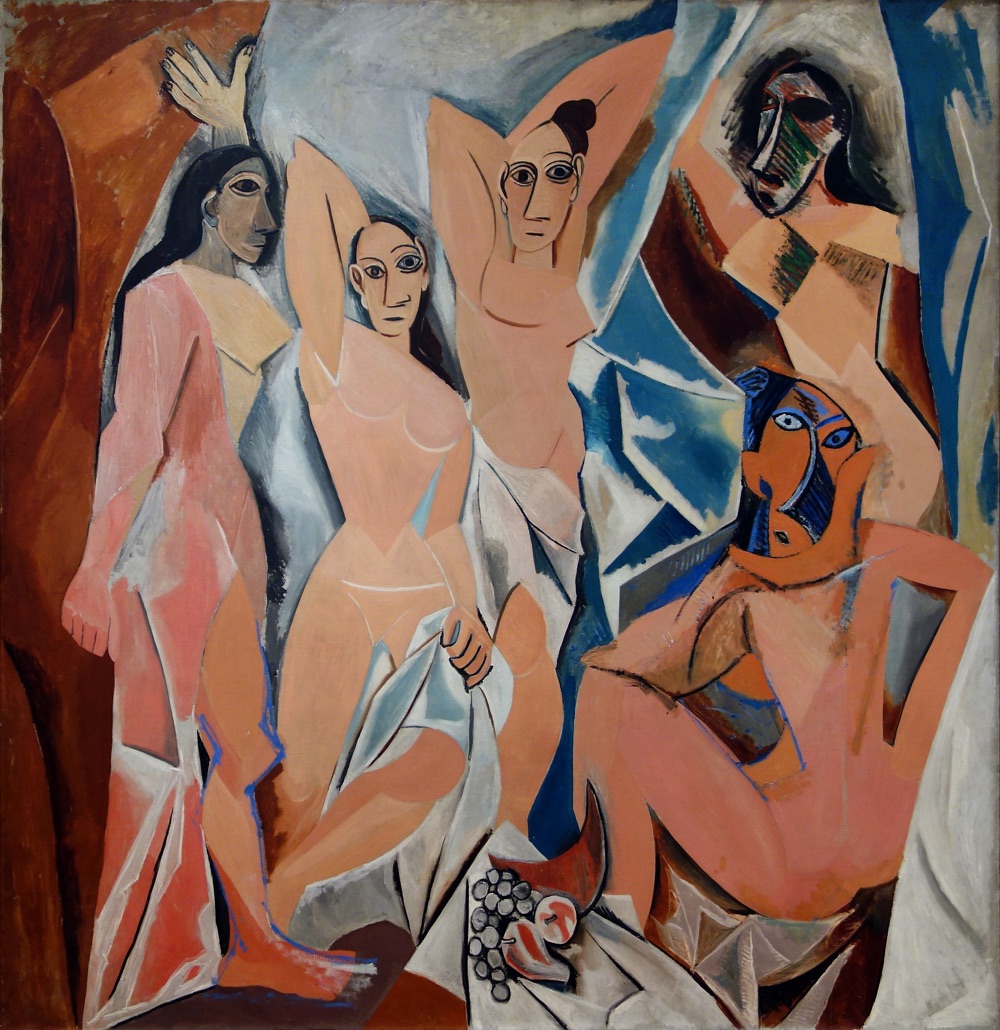
And the Beatles are far from the only example that illustrates the gulf between recombination and invention. When Picasso shattered the conventions of representation and unveiled Cubism, there was no linear path connecting 19th-century realism to Les Demoiselles d’Avignon.
When hip-hop emerged in the South Bronx, it forged a cultural form – turntables as instruments, sampling as language – that no dataset could have predicted. Miles Davis’s Birth of the Cool created a new musical grammar; the preconditions were present, but the leap itself was not contained within them.
The same is true in technology. The iPhone was not simply a blend of a phone, camera, and computer. It reframed what a personal device could be, collapsing categories that – until that moment – felt natural and immutable. These are Schumpeterian moments: the invention of new combinations that destabilize the old order and inaugurate the new.
AI, by contrast, excels at being familiar.
This distinction matters because we are increasingly confusing variation with invention. AI’s creative process is mechanical. It detects patterns, optimizes similarities, and recombines elements drawn from its training data. Humans do something different: we redefine the problem itself. We imagine possibilities that are notextrapolations of anything that came before.
Schumpeter and creativity
This is where Joseph Schumpeter and Herbert Simon provide the conceptual clarity the debate is missing.
Schumpeter argued that innovation arises through new combinations – qualitative ruptures that reshape markets, industries, and consumer behavior. These innovations generate new value structures rather than optimizing old ones. They cannot be derived statistically from existing examples.
Simon, however, viewed creativity as a form of complex problem solving within a defined problem space. Agents explore possibilities under constraints, using heuristics and rules to search for solutions. This description perfectly suits modern AI, which is essentially a high-powered exploration engine across the space of what is already known.
Combining these two perspectives reveals the true limits of artificial intelligence. Through Simon, we understand AI as an extraordinary generator of possibilities – drafts, blends, stylistic variations, prototypes. Through Schumpeter, we understand why this does not yet qualify as innovation. New combinations require intentional, imaginative leaps that alter the structure of the domain itself.
The future
Can AI produce such new combinations? Not under current architectures. It lacks autonomy of aims, cannot posit new forms of value, cannot redefine the problem space, and cannot select for significance. It does not invent – because invention is not a statistical operation.
AI will overwhelm the world with output. But output is not vision. And mistaking mechanical novelty for genuine creation risks flattening our understanding of the new.
Real creativity has always involved risk, discomfort, and conceptual courage. It bends rules, invents categories, and expands the horizon of the possible. Schumpeter understood this. Simon understood its mechanics. What neither anticipated is a culture so mesmerized by synthetic novelty that it begins to forget what true innovation looks like.
AI can rearrange the world we already know. Only humans can create the world that does not yet exist.
Schumpeter’s “New Combinations”
Joseph Schumpeter defines innovation as the introduction of “new combinations” – novel arrangements of existing resources that produce qualitative change in the economic system. These include new products or product qualities, new production methods, new markets, new sources of supply, and new forms of industrial organization. What distinguishes a new combination is its discontinuity: it is not an incremental improvement but a shift that alters established patterns of economic activity.
Although new combinations draw upon existing knowledge, they require creative judgment that transforms familiar elements into configurations not previously realized. This sets innovation apart from mechanical recombination. In this framework, artificial intelligence can generate extensive variations within known domains, but whether such outputs qualify as Schumpeterian new combinations depends on their capacity to produce structural economic change, rather than merely generating artifacts that appear novel.
Simon on Problem Solving
Herbert Simon conceptualized creativity as a form of problem solving within a defined “problem space,” where agents generate new solutions by exploring possibilities constrained by rules, available knowledge, and heuristics. Creativity arises not from overturning the structure but from navigating it effectively.
This framework aligns closely with contemporary artificial intelligence, which excels at searching vast combinatorial spaces and generating variations based on prior data. In Simon’s sense, AI can be highly creative, but its creativity remains bounded by the structure of the problem space it is given.
Top photo: The Beatles redefined what rock and pop should and could be. Foto Martin Wahlborg